Most Pakistan-based applicants are not refused the Portugal D8 (Digital Nomad) visa because they are “ineligible.” They actually get refused (or delayed) because their income story is messy on paper: Payoneer/Wise screenshots, random lump-sum credits, unclear client proof, and no clean “average monthly income” calculation.
Portugal’s Pakistan-facing checklist is blunt: you must show proof of average monthly income for the last 3 months, meeting a threshold tied to 4× the Portuguese minimum guaranteed remuneration, plus a document proving fiscal residence.
Income strategy blueprint (Pakistan-friendly) that matches the official checklist
Build a 3-month “income pack” that proves:
- Your remote work relationship (employment or freelance)
- Your average monthly income meets the 4× minimum threshold
- The same income lands into a bank account under your name
Support it with invoices/payslips and a one-page calculation sheet.
Step 1: Know the real target number (and don’t guess it)
The Pakistan checklist ties income to four monthly minimum guaranteed payments.
Portugal’s government announced the minimum wage is €920 in 2026, so 4× = €3,680/month (for that year).
Best practice: write the threshold as a formula.
4 × current minimum wage = required monthly income
It also shows the actual euro figure for the year you apply, because wages can update.
Step 2: Present “average monthly income” like an auditor
The phrase “average monthly income for the last three months” is where Pakistani freelancers usually lose clarity.
Use a one-page Income Calculation Sheet:
- Month 1 total eligible income (by bank credits)
- Month 2 total
- Month 3 total
- Average = (M1 + M2 + M3) / 3
- Convert to EUR using a consistent approach (e.g., bank conversion rate on statement date, or a single reference rate with a printout)
Key rule: whatever method you choose must match your bank statements and supporting invoices/payslips.
What income counts (salary vs freelance) and how to prove it cleanly
If you are salaried, anchor your file on your employment contract + employer letter + salary credits.
If you are freelance, anchor it in client contracts, invoices, and matching bank credits.
Your goal is one unbroken chain:
contract → invoice/payslip → bank credit
The official checklist separates remote work proof into two lanes:
- Subordinate work (employee): work contract or employer declaration confirming the labor link
- Independent work (freelancer): services contract/proof of services to entities
Employee (remote job): Strongest Structure
Use:
- Work contract
- Employer letter confirming remote status + role + salary + duration
- Payslips (if available)
- Bank statements showing salary credits (3 months)
Freelancer/Contractor: Make it “Stable” on Paper
Use:
- 1–3 core client contracts (not 15 random gigs)
- Invoices for the last 3 months
- Bank statements with invoice-matching credits
- Optional: client confirmation emails or letters (short, factual)
The “Income Pack” Checklist (what to include, in what order)
Submit your income evidence as a structured bundle with a cover page, a 3-month income summary, and labeled exhibits, so the visa officer can verify your threshold quickly and reduce back-and-forth.
Suggested pack order:
| Section | What to include | Why it matters |
| Cover Page | One-page overview + your income formula and average | Makes your file “reviewable” fast |
| Exhibit A | Work contract OR services contracts | Converts “relationship” into “payment due” |
| Exhibit B | Employer letter OR invoice set | Converts “relationship” into “payment due” |
| Exhibit C | Bank statements (last 3 months) | Proves the money actually lands |
| Exhibit D | Income Calculation Sheet | Proves the “average” requirement |
| Exhibit E | Fiscal residence evidence | Required on the Pakistan checklist |
 Fiscal residence + translations: Pakistan applicants miss this the most
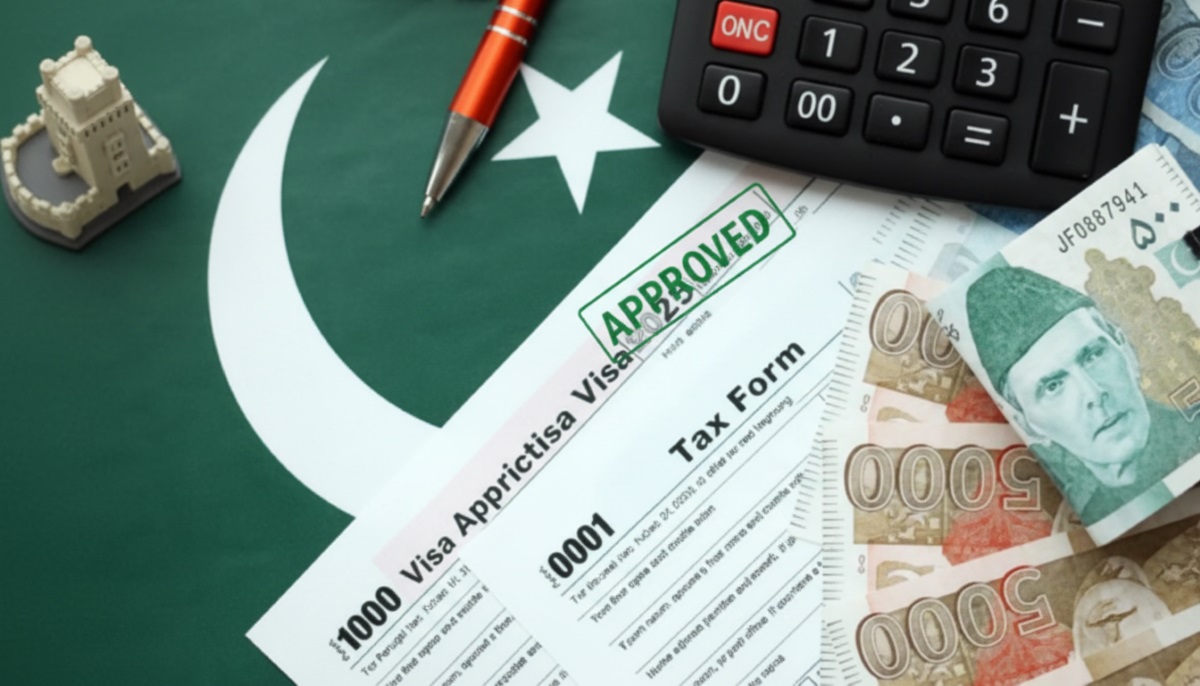
The Pakistan checklist asks for a “document attesting fiscal residence,” and it warns documents must be in Portuguese/English and (if applicable) attested by Pakistan’s Ministry of Foreign Affairs (MOFA). Skipping these often causes delays or re-submission.
Practical “fiscal residence” options (choose what fits your profile):
- FBR registration proof (and recent return/statement if available)
- Any official tax residency-related document showing you’re tax-linked to Pakistan
- Supporting: NTN/IRIS profile screenshots only if backed by official records
Translation/attestation reality: the checklist explicitly flags translation to Portuguese/English (if needed) and MOFA attestation.
End-to-end process: Pakistan application → Portugal Residence Card
From Pakistan, you apply for a National (long-stay) visa (not a Schengen visa). After arriving, you complete the residence permit stage in Portugal through AIMA, where you submit your passport, a valid residence visa, remote-work declarations, and proof of address/accommodation.
Phase 1: Pakistan (National Visa)
Portugal’s embassy guidance is clear: stays over 90 days require a national visa.
Your file is assessed on completeness, credibility, and alignment with the checklist.
Phase 2: Portugal (AIMA residence permit under Art. 88)
AIMA’s “digital nomads” page (Art. 88.º, n.º 1) shows that the residence permit step includes a passport, a valid residence visa, a declaration confirming the remote work link/services, and a declaration about your address (plus proof, depending on whether you rent/own).
AIMA also notes that this residence permit is typically valid for 2 years and renewable (with subsequent renewals potentially longer).
Danger zone: the fastest ways to get delayed or refused
Most refusals/delays stem from credibility gaps: unexplained deposits, mismatches between contracts and bank credits, missing proof of fiscal residence, incorrect language/attestation, or documents that appear edited.
Watch-outs (Pakistan-specific reality):
- Lump-sum credits with no invoices/contract mapping
- Bank credits under a different name/account holder
- Payoneer/Wise screenshots with no underlying bank statements
- Missing “average income” math (don’t assume they’ll calculate it)
- Documents not in English/Portuguese and not handled per the checklist note
- Any fake/edited bookings or documents may result in refusal and consequences
- Being unable to explain your work relationship if called for an interview
Pakistan Budgeting Reality: Don’t Pass Income and Still Fail “Life Math”
Meeting the €3,680/month threshold is necessary, not sufficient. You also need a realistic buffer for housing, insurance, and the time gap between entry and your residence card, so your bank statements and spending do not contradict your “stable income” narrative.
(For detailed insights on relocation and setup costs from Pakistan to Portugal, see NextVisaStep)
A simple strategy:
- Keep your last 3 months clean and repeatable
- Avoid sudden “loan injections” right before statements
- Maintain a stable balance that supports accommodation + initial setup
A practical approach you can copy
Turn messy freelance income into a visa-readable file:
- one-page summary
- contract/invoice mapping
- bank reconciliation
- fiscal-residence bundle
The goal is to make your story easy to verify without the officer needing to “guess.”
(For more on preparing freelance income documentation for visa applications, see SchengenVisaSupport.com.)
FAQs (Pakistan applicants)
If my income is variable, can I still qualify?
Yes, if your 3-month average meets the threshold and you can explain the variability in invoices/contracts and bank credits.
Can I show Payoneer/Wise instead of a bank statement?
Use them as supporting documentation, but your foundation should be a proper bank statement that clearly shows deposits in your name (and matches invoices/payslips).
Do I need to apply for Schengen first?
No, if your stay exceeds 90 days, Portugal requires a national visa.
After I arrive, what does AIMA want?
AIMA lists a valid passport, your residence visa, a declaration proving your remote work/service relationship, and address/accommodation declarations (with proof depending on your housing status).
Important disclaimer
This article is informational and not legal advice. Requirements and document-handling procedures may change, and the Embassy may request additional documents or an interview. Always verify with official sources and your specific checklist.