If you’re a Pakistani freelancer, your contract is not just a formality; it’s one of the strongest proofs that your income is real, foreign-based, and repeatable.
Most refusals occur when the contract appears generic, payments don’t meet the bank’s requirements, or the client relationship feels informal.
This guide outlines what a freelancer contract for the Slovenia Nomad Pass should include and how to link it to invoices and bank statements.
What Slovenia needs from a freelancer contract
Your contract must clearly prove remote work for a foreign client and a stable, verifiable payment structure.
For Pakistani applicants, the contract should read like a professional, auditable agreement rather than a casual job offer letter. A visa officer should understand your role, pay, and client relationship in under a minute.
Slovenia’s official rule is that monthly funds must be at least 2× the average annual net salary (calculated using the latest average gross monthly wage published in the Official Gazette). Because this benchmark is updated, the exact euro figure may fluctuate.
However, recent professional summaries place the requirement roughly in the low-to-mid €3,000s/month range, so you should aim for a contract showing at least €3,300/month to comfortably clear the threshold and avoid borderline doubts.
Before you write clauses, lock these basics:
- The client is outside Slovenia
- Work is remote
- Payments are traceable (invoice → transfer → bank credit)
- Dates and amounts are consistent across the file
The contract clauses that make a Slovenian freelancer’s file stronger
A firm contract reduces uncertainty by locking in scope, payment terms, foreign-only work, and verification.
Most freelancers submit services + fee. That’s not enough. Use this structured format to make your contract look like a real legal agreement.
- Parties & Identifiers: Full legal names, addresses, emails, and (if possible) company registration details for the client.
- Work Mode (Remote): Confirm services are delivered remotely from Pakistan/UAE/Saudi Arabia (as applicable).
- Client Location (Foreign-Only): State that the client is outside Slovenia and services are provided to a non-Slovenian entity.
- Scope of Work: 3–6 specific tasks that match what you actually do (and what your invoices will show).
- Payment Amount & Currency: State exact amount and currency (EUR/USD is usually clearer than PKR).
- Payment Cadence: Monthly retainer / per project / hourly, choose one primary structure and keep it clean.
- Invoice Clause: “Contractor issues invoices; client pays against invoice” (monthly or per milestone).
- Payment Method: Bank transfer / Wise / Payoneer (keep it factual; don’t over-explain the platform).
- Term & Renewal: Start date + end date, or ongoing with renewal logic (e.g., auto-renews monthly unless terminated).
- Governing Law (Must-Have): Specify which country/state laws govern the contract (e.g., England & Wales / Delaware / UAE). This instantly makes it look like a real agreement—not a “job offer letter.”
💡 Insider Secret: Governing Law + invoice clause + payment cadence upgrades a contract from “informal” to “auditable” in an officer’s eyes.
Payment terms that look credible to visa officers
The best payment terms are predictable, repeatable, and easy to align with your bank’s credit terms. Officers don’t like payment chaos. Pakistani files often fail when deposits look random or arranged.
A clean payment setup usually looks like:
- Fixed monthly amount (best)
- Same payment window each month (e.g., 1st–7th)
- Clear currency (USD/EUR/GBP) stated in the contract
- Bank credit matches invoice totals (or documented partial payments)
⚠️ PKR Volatility Tip: If your contract is written in PKR, exchange-rate swings and inflation can make your income look weaker on paper. For greater clarity, write contracts in EUR or USD, or add a line stating that payments are pegged to EUR/USD, even if received in PKR, so the “real-world value” remains consistent.
How to match contract → invoices → bank statement
Your contract becomes believable only when invoices and bank credits support it. This is the biggest gap in Pakistani freelancer files: they submit a contract, but the bank shows unrelated deposits.
Use this simple system:
- Contract states pay + cadence + scope
- Invoices are dated, numbered, and match the contract terms
- Payment evidence shows the client’s payment (Wise/Payoneer/bank confirmation)
- Bank statement shows the credit entry (matching amount/date range)
- Mapping sheet links Invoice # → Amount → Date → Bank credit line
Mapping Sheet Example (1-line):
Invoice #202: $3,500 (Jan 5) → Payoneer Receipt: $3,500 (Jan 7) → Bank Credit: PKR 980,000 (Jan 8).
Why it matters: This single page prevents the officer from having to do the math or “connect dots” themselves—so your income looks verified, not self-declared.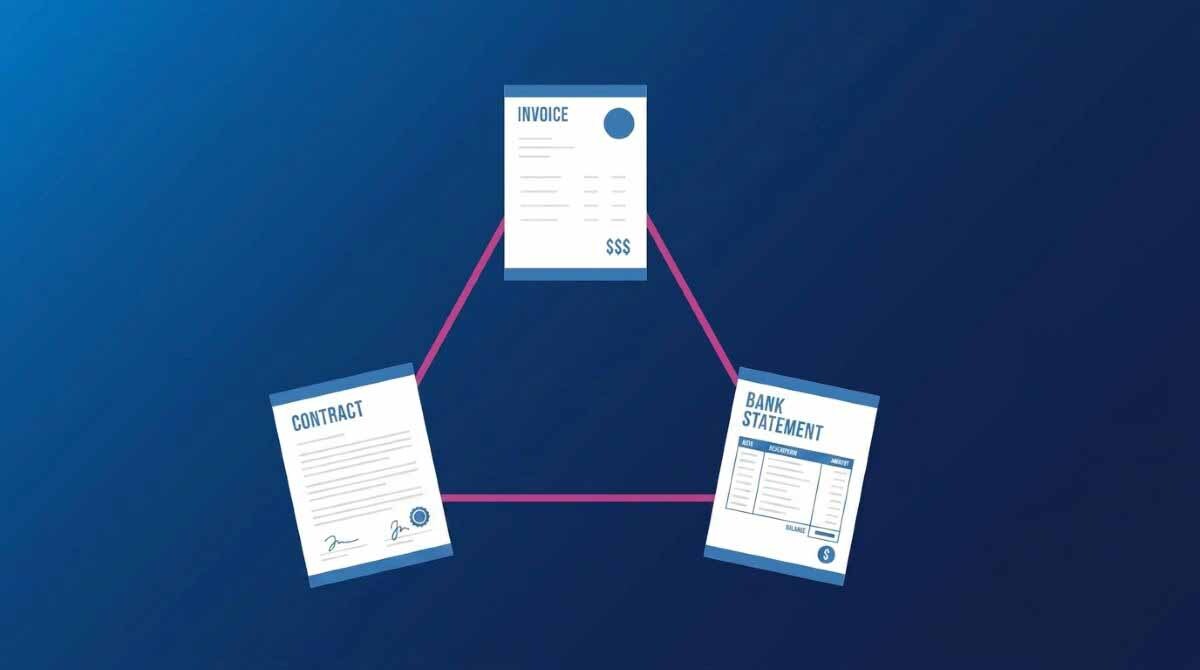
⚠️ Pakistan Critical Rule: Avoid sudden deposits near the application period. Even if funds are genuine, unexplained deposits often trigger refusal risk because the Source of Funds looks weak.
Payoneer/Wise freelancers: how to write contract wording safely
If you use Payoneer/Wise, mention it as a payment channel, but anchor your file to invoices and bank deposits.
Don’t over-explain the platform. Keep it traceable.
Good simple wording:
- “Client will pay contractor against invoice via bank transfer / Wise / Payoneer.”
- “Payments will be made in USD/EUR/GBP and recorded in the contractor’s financial records.”
Then your supporting documents must show:
- Invoice list
- Payoneer/Wise incoming entry
- Transfer to your bank (if you transfer)
- Matching bank credits
Pakistan add-on: FBR, NADRA, and MOFA—what actually helps
Your contract looks stronger when your identity and tax story support it. A contract alone can look “downloaded.” But when your identity and income story align, the file seems real.
Practical Pakistan credibility upgrades:
- FBR/NTN alignment (where available) strengthens legitimacy for higher income profiles
- NADRA name consistency across passports, invoices, and bank accounts
- MOFA attestation only where it adds clarity (over-attestation doesn’t fix weak banking)
⚠️ Pro Tip: If your name spelling differs across documents, fix it early or explain it clearly. Minor mismatches can create “verification” objections.
Weak vs Strong freelancer contract for Slovenia
Officers trust contracts that create a paper trail. Your job is to make that trail obvious. If your contract appears weak, fix it before you submit.
| Contract Element | Weak Contract (High Risk) | Firm Contract (Low Risk) |
| Client details | Only a name + Gmail | Full legal name, address, company info, official email |
| Work type | “Freelance services” | Remote services with clear scope items |
| Foreign-only clarity | Not mentioned | Client is outside Slovenia + services to a non-Slovenian entity |
| Payment terms | “Paid as agreed” | Amount + currency + payment schedule + invoice clause |
| Proof chain | No link to invoices | Invoices required + payment method stated |
| Term | No dates | Start/end date or renewal logic |
| Governing law | Missing | Clearly stated governing law |
| Termination | Missing | 14–30 days notice clause |
Disclaimer: This article is for informational purposes only and does not guarantee visa approval. Final decisions are made solely by the Slovenian authorities based on your submitted documents.